

What’s really going on in Venezuela?
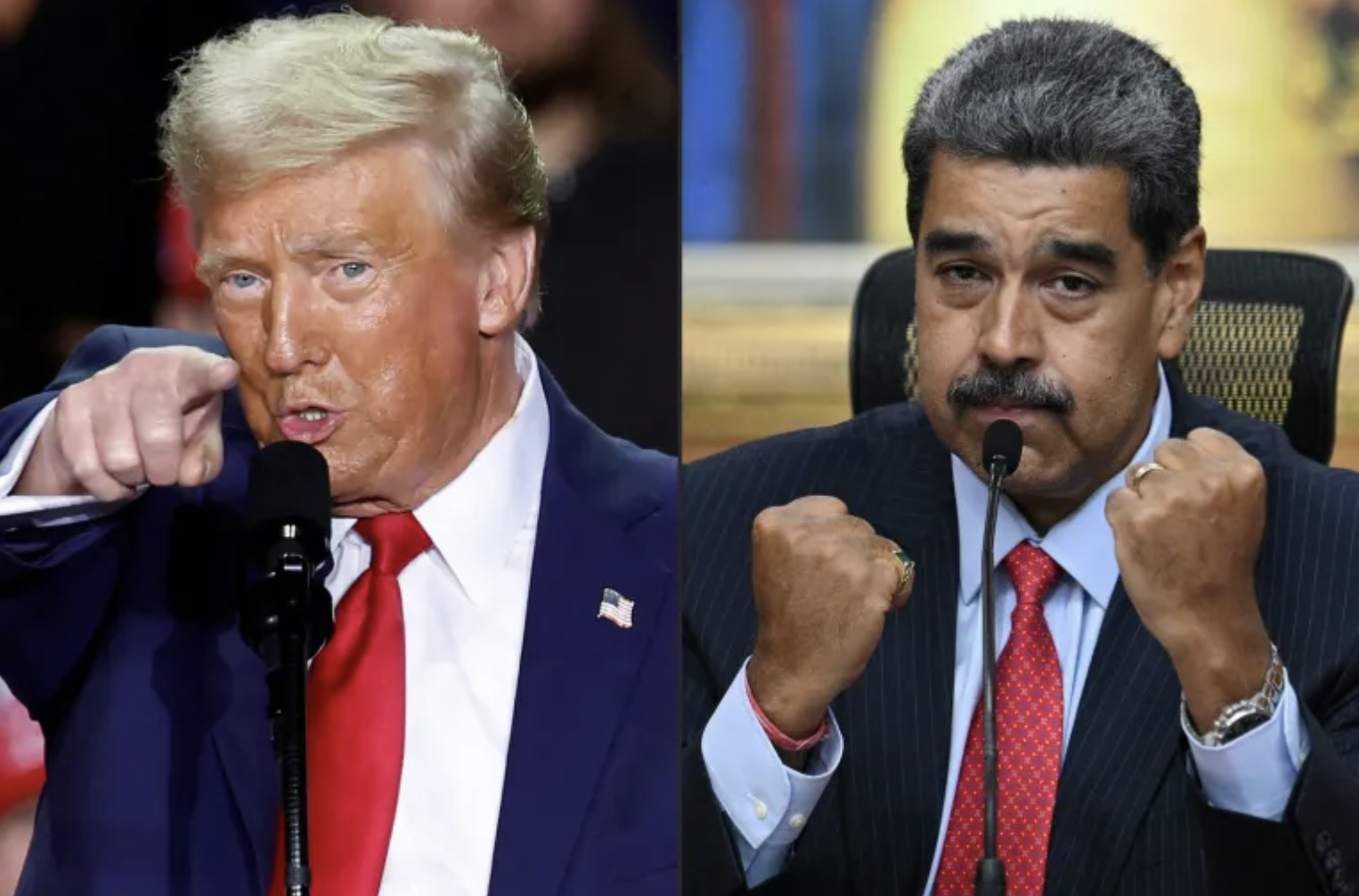
Public explanations for U.S. action in Venezuela still rely on familiar language. Drugs. Immigration. National security. But that framing collapses once incentives are examined, especially after Donald Trump said plainly what the United States expects to gain.
Trump has openly acknowledged that Venezuela is fundamentally about oil. Following U.S. attacks and the arrest of Nicolás Maduro, Trump said American oil companies would rebuild Venezuela’s oil infrastructure and extract massive wealth as compensation for the United States. He described a long-term U.S. presence and spoke explicitly about taking oil “out of the ground.”
Energy analysts agree that restoring Venezuela’s oil sector will take many years, likely close to a decade. That reality implies sustained U.S. political, military, and corporate control, not a limited intervention.
Trump was equally explicit about governance. He said Vice President Delcy Rodríguez is temporarily in charge but must follow White House directives. He dismissed concerns about deploying ground forces and framed U.S. dominance as a successor to the Monroe Doctrine.
Oil is the primary asset. But it is not the only one…
Crypto matters because Venezuela’s economic collapse pushed digital assets into everyday survival. This context does not absolve the Maduro government. It explains why the country is uniquely exposed.
The Maduro regime has been widely accused of large-scale corruption and of using state financial systems, including cryptocurrency mechanisms, for personal and political enrichment. There is no verified evidence that the government directly hacked private citizens’ Bitcoin wallets. That distinction matters. What is documented is systemic exploitation.
The government launched its own national cryptocurrency, the Petro, marketed as an economic solution but widely regarded as a failed political stunt. Rather than empowering citizens, it consolidated state control and helped evade sanctions. It never became a viable currency.
U.S. authorities have accused Maduro and associates of extensive corruption, money laundering, and misuse of state assets, including oil revenue and gold reserves. More than $700 million in assets linked to the regime have been seized.
At the same time, independent Bitcoin miners faced crackdowns. Reports describe security forces extorting miners, confiscating equipment, and forcing bribes. While not digital theft in the technical sense, these actions stripped citizens of crypto-based income and assets.
Crypto was also used to evade sanctions and to skim remittances sent by Venezuelans abroad. In short, digital assets became both a survival tool for citizens and an extraction mechanism for the state.
This history matters because it leaves behind two things: Concentrated wealth, and weak defenses.
Now consider U.S. incentives….
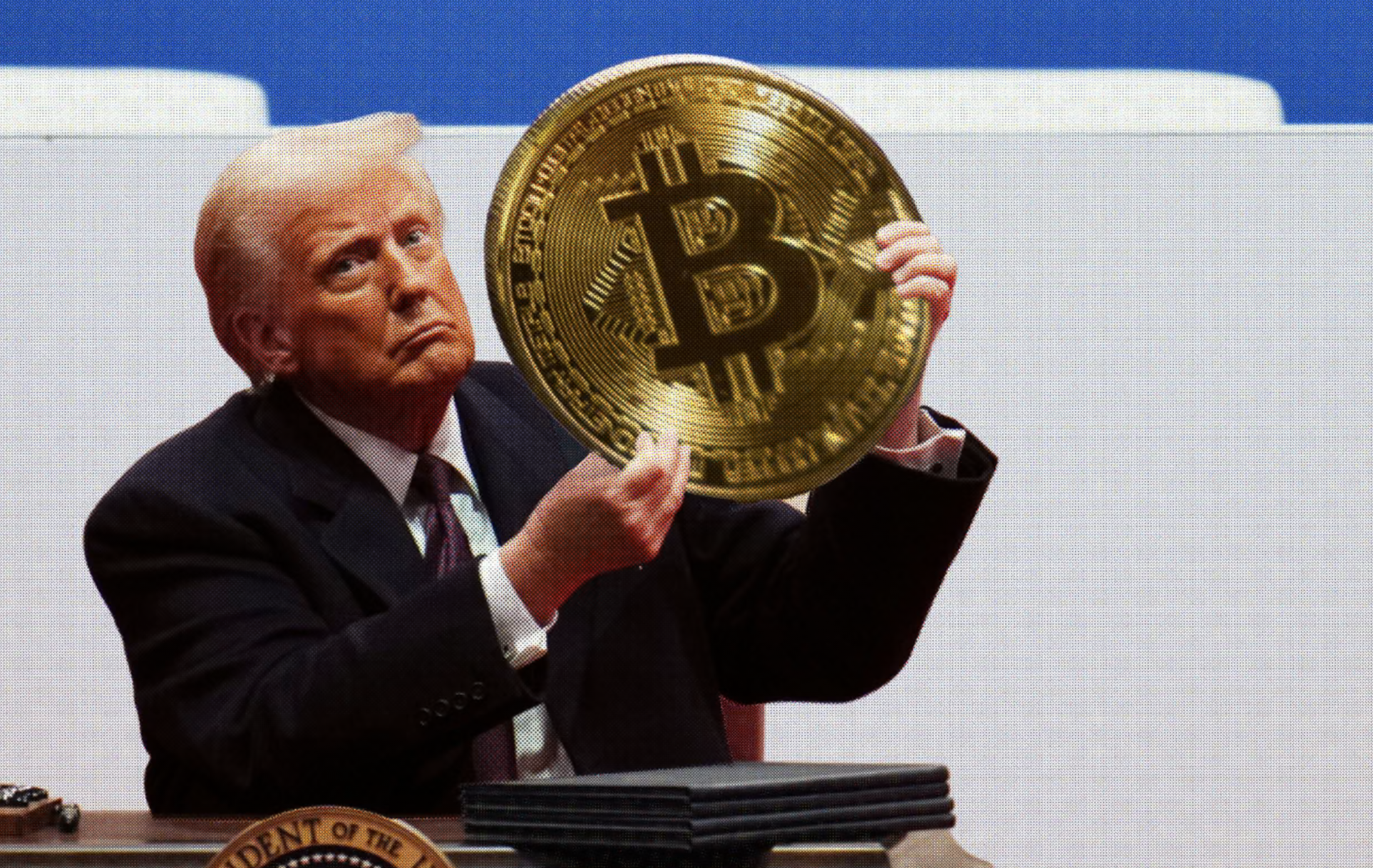
Source: The Guardian/Getty Images.
Trump’s second term has been accompanied by unprecedented personal enrichment tied directly to policy and access. According to extensive reporting by The New Yorker, Reuters, Time, Bloomberg, and the Financial Times, the Trump family has built a sprawling crypto-centered business ecosystem while Trump simultaneously reshaped U.S. crypto policy.
In late 2024, Trump and his sons launched World Liberty Financial, a crypto company structured so the family receives roughly seventy cents of every dollar raised from token sales. Major foreign investors followed, including figures facing regulatory or legal scrutiny. After Trump returned to office, regulatory pressure on some of those investors eased.
Trump refused to divest his businesses, placing them instead in a revocable trust controlled by his sons. This preserved direct financial exposure to policy outcomes. His administration then moved quickly to loosen crypto regulation, pause enforcement actions, and promote the United States as the “crypto capital of the world.”
Trump personally launched meme coins, $TRUMP and $MELANIA, which spiked in value after promotion by the President and First Lady. His sons expanded into bitcoin mining, crypto exchanges, stablecoins, and investment funds. Foreign sovereign wealth funds and overseas buyers became major participants. Reuters found that more than two-thirds of World Liberty token purchases were likely foreign.
One of the clearest examples of overlap involved Binance. A U.A.E. state fund invested two billion dollars into Binance using a Trump-affiliated stablecoin, USD1. The transaction massively increased the coin’s circulation and generated tens of millions annually for the Trump business. Shortly afterward, U.S. export restrictions on advanced chips for the U.A.E. were eased. Months later, Trump pardoned Binance founder Changpeng Zhao.
By mid-2025, estimates of Trump family earnings since returning to office ranged from $800 million to over $1.8 billion, with paper crypto wealth reaching several billion more. While crypto markets later declined, the cash proceeds remained.
This matters because it establishes a pattern. Trump’s presidency is not separate from his business interests. It is intertwined with them.
Venezuela, then, is not just an oil play. It is a country rich in fixed physical assets and exposed digital wealth, weakened by corruption, sanctions, and institutional collapse. It is a place where oil infrastructure can be taken over and where crypto-related assets, networks, and flows are already politicized.
There is no document proving a coordinated plan to seize both oil and crypto. That should be stated clearly. But Trump has removed ambiguity around oil. He has described extraction, compensation, and control in his own words. His broader financial behavior shows a willingness to align foreign policy, regulation, and personal enrichment.
When a weakened state holds enormous physical and digital assets, and an administration openly prioritizes dominance and profit, the incentives are not subtle.